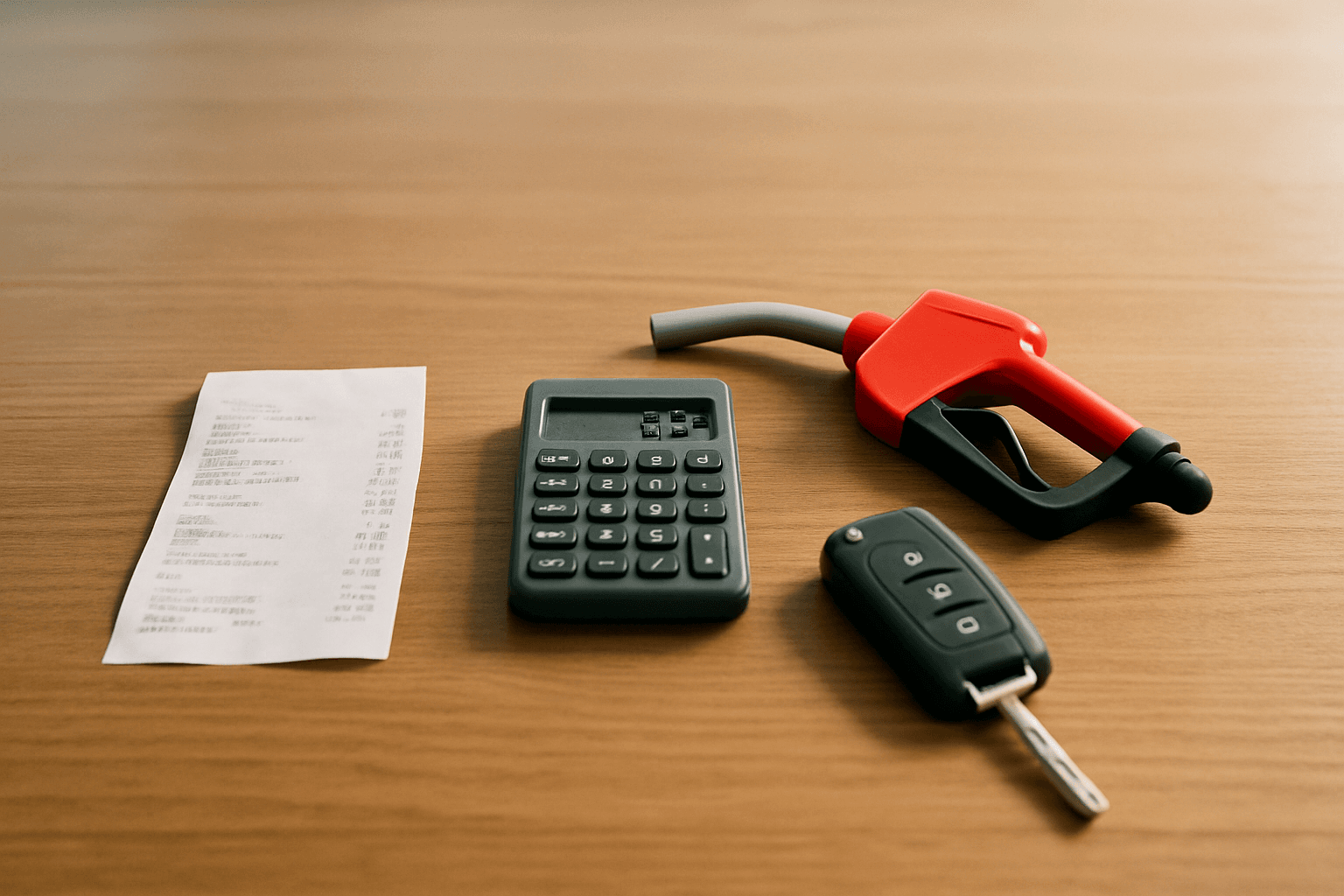
You're parked outside a Safeway with a batch offer on your screen: $14.50 for 38 items, and the customer is 9 miles away. Your thumb hovers while you try to do the math in your head.
So, is the Instacart job worth it? It can be, but only if you count your real costs and stay picky about which batches you take. As a flexible side income with a reliable car, it works for plenty of people. As a full-time paycheck built on whatever offers show up, it often doesn't.
The rest of this post gives you what the short answer can't: the math with gas, taxes and dead time included, a worked example, the mistakes that quietly eat your pay, and a two-week test to find out your own answer.
The offer on your screen is not your hourly pay
That number is a gross figure. Before it's yours, it has to cover your gas, the wear on your car, your insurance, your phone plan, and the self-employment tax you'll owe as an independent contractor. Mileage rules and deduction rates change, so check current IRS guidance or ask a tax pro instead of trusting a number from a blog.
Then there's the time nobody pays you for. The drive to the store, the deli line that always takes forever, the wait in the lot, the minutes between batches when nothing is coming in.
Here's the formula that actually matters: (offer minus driving costs minus tax set-aside) divided by every minute from starting the batch until you're free for the next one.
Pay rates, tips and batch volume vary a lot by market and by time of day. Your app is the only place to see what's offered near you right now.
A hypothetical batch, worked out step by step
These numbers are made up to show the method. They are not real pay data, and your market, car and tips will be different.
The offer is $24 total, tip included, for 30 items. The store is 6 miles away and the customer is 5 miles past that.
Add 4 miles to get back to a spot where you'd catch the next batch. That's 15 miles. If you figure your car costs you 40 cents a mile (use your own number), that's $6.00. You're at $18.00.
Set aside 20% for taxes, again as a placeholder. That's $3.60, leaving $14.40.
Count the time: 12 minutes to the store, 35 shopping, 5 at checkout, 15 delivering and carrying bags, and 15 waiting for the next offer. That's 82 minutes, or about 1.37 hours.
Divide $14.40 by 1.37. You get roughly $10.50 an hour.
On the screen, $24 for an hour and change looked like about $17 an hour. After costs and dead time, it's closer to $10.50. That gap is the whole story of whether this job is worth it.
Now change one thing. Same $24, but the trip is 8 miles total and it's a store you know well, so shopping takes 25 minutes. The math jumps noticeably. Which batch you accept matters more than how many you accept.
Mistakes that make the job not worth it
Most shoppers who say Instacart isn't worth it are losing money in the same few places.
Judging offers by the dollar amount alone, without checking miles and item count.
Taking long-distance batches because the total looks big, then burning 20 minutes of gas money getting there.
Ignoring heavy orders. Three cases of water and a 40-pound bag of dog food on a third-floor walk-up costs you time and your back, and the pay rarely reflects it.
Forgetting the empty minutes between batches, which is where an hourly rate quietly shrinks.
Not setting money aside for taxes, then getting surprised in spring.
Never tracking anything, so the only data you have is a feeling.
The sneakiest one is the last. Without numbers, a few great batches on a Saturday can convince you the whole week was good.
Who it's usually worth it for (and who it isn't)
Be honest about which row looks like you.
| Your situation | Usually worth it? | Why |
|---|---|---|
| Side income around another job, flexible hours | Often yes | You can pick your windows and skip weak offers. |
| Fuel-efficient car, dense area with many stores close together | Often yes | Short trips keep mileage costs low. |
| Full-time, rural area with long drives | Often no | Miles and dead time eat the offers. |
| Older car with high repair risk | Be careful | Wear costs can turn a decent batch into a loss. |
| Need a guaranteed paycheck | Usually no | Offers vary by day, season and market. |
| Gap-filler between jobs | Can be | Fast to start, but treat it as a bridge. |
Run a two-week test to get your own answer
Forget what anyone online earns. Your market, car and schedule decide it. Track these for two weeks and you'll know.
Write down your real cost per mile: gas plus a fair amount for wear. Use the same number every time.
For every batch, log the offer, the total miles, the store, and the minutes from accepting to finishing.
Log your waiting time separately, including parking lot time between batches.
Subtract your mileage cost and a tax set-aside from each batch.
Divide by the total time, dead time included, and write that hourly figure next to the batch.
At the end of two weeks, sort by store, time of day and batch size. Look for the patterns that pay and the ones that don't.
Set your minimum: the lowest net hourly rate you'll accept, and a minimum payout per mile.
A spreadsheet or a notes app is plenty. The point is that you stop guessing.
Advanced moves once you know your numbers
After two weeks of data, you'll probably see that a handful of stores and time windows produce most of your good hours. Lean into those and stop spreading yourself thin.
Some stores are consistently slow: long lines, crowded aisles, bad parking. Others you can finish in your sleep. Your log will show the difference, and it's often bigger than the difference in offer amounts.
Set a hard cutoff for distance and for heavy items, and stick to it even on a slow afternoon. Turning down a bad batch costs you a few minutes. Taking it can cost you the hour.
Also be wary of long unpaid stretches. If you're regularly sitting 30 minutes for one decent offer, the problem isn't your effort. It's your timing or your location, and that's worth testing.
Where ShopperBoost fits in
The hardest part of everything above is that the best offers don't wait around while you do math. Staring at the screen for hours to catch them is its own cost, and it's the dead time that wrecks your hourly rate.
ShopperBoost is the official distributor of ShopperX, an automation tool for Instacart shoppers (and Veho drivers) in the US and Canada. You set your rules once in Smart Filters: a minimum payment, a maximum distance, preferred stores and allowed stores. ShopperX then accepts only batches that match all of your criteria, and it keeps working in the background on your iPhone so you don't have to hold the screen open. Both ShopperX and Instacart need to stay open, and you can keep the screen off. A Live Feed shows what's being detected and accepted, and you can still accept anything else manually in the Instacart app.
It pairs naturally with the numbers from your two-week test, since your minimum payout and distance cutoff become the filters. A few facts to know before you try it: it's iPhone only, it works in the US and Canada, and the free trial gives you 5 days of full access with no credit card. The paid US key is $110 and runs for 30 days or up to $1,200 in earnings, whichever comes first.
Results depend on your market, your hours and how you set your filters, so nothing is guaranteed. It's also automation, and no tool can guarantee zero risk to your account, so read Instacart's current terms and decide for yourself.
Frequently asked questions
How much do Instacart shoppers really make?
It varies by market, time of day, tips and how selective you are. Your own log is the only number you can trust, so track net pay per hour, not just the offer amounts.
Is Instacart worth it as a side hustle?
Often, yes, because you control when you work and can skip weak offers. It's strongest when you work in short windows near dense clusters of stores.
What's a good minimum to accept on a batch?
There's no universal number. Set yours from your own math: a minimum net hourly rate, plus a minimum payout per mile that covers your car costs with room to spare.
Do I have to pay taxes on Instacart earnings?
As an independent contractor, you're generally responsible for your own taxes, including self-employment tax. Set money aside from every batch and check with a tax professional about deductions like mileage.
The offer on your screen is only the starting number, and the real question is what's left after miles, taxes and unpaid minutes. Track two weeks of your own batches and you'll know whether this job is worth it for you.
This site is not affiliated with Instacart.